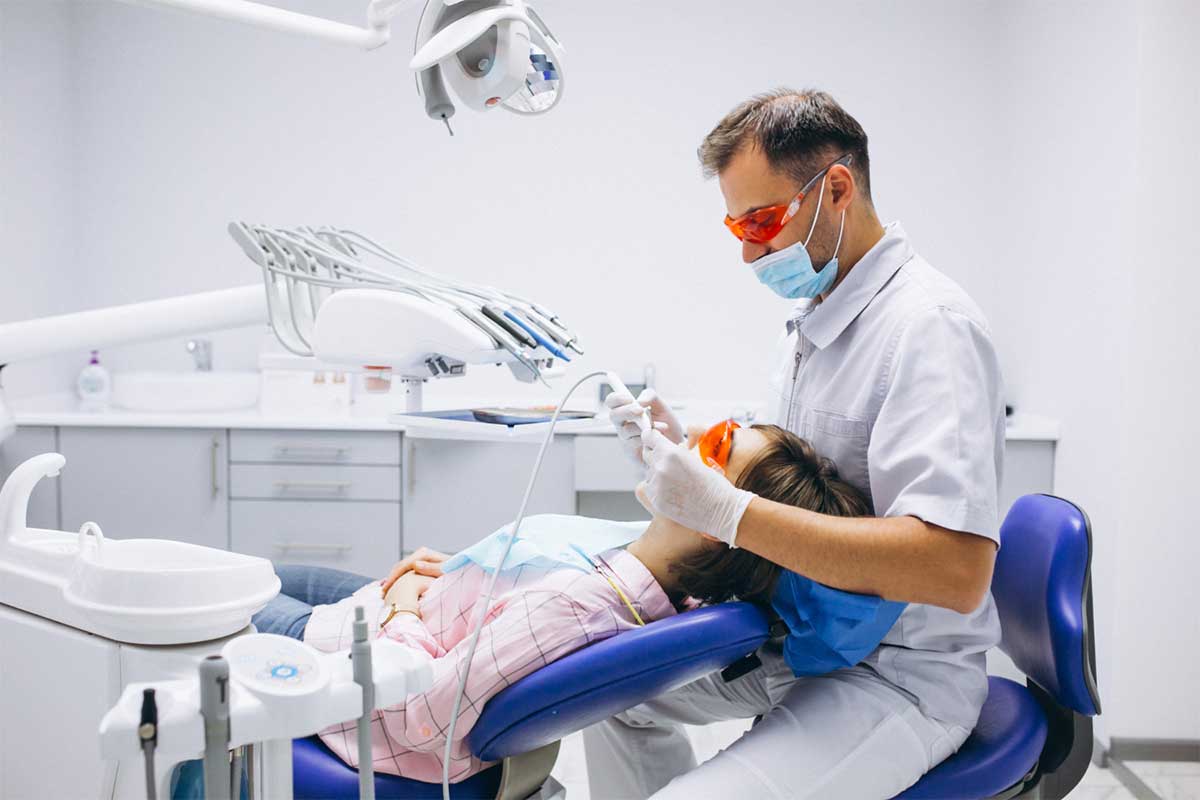
Laser technology has become essential in dentistry because it performs various dental treatments on soft and hard tissues, offering better control and superior precision than traditional techniques.
Applications of Laser in Dentistry
- Tooth decay : Lasers are used to remove decay within a tooth and prepare the surrounding enamel for receipt of the filling.
- Root canal treatment : Lasers can be used in root canal disinfection to improve success rates.
- Gum diseases : Lasers can be used to remove infected gum tissue in gum diseases and also to reshape gums for cosmetic and orthodontic purpose.
- Biopsy or lesion removal : Lasers can be used to remove a small piece of tissue (called a biopsy) so that it can be examined for cancer or any other underlying condition. Lasers are also used to remove lesions in the mouth and relieve the pain of mouth ulcers.
- Teeth whitening : Lasers are used to speed up in-office teeth whitening procedures. Peroxide bleaching solution, applied to the tooth surface, is activated by laser energy, which speeds up the whitening process.


Why Laser Dentistry Matters for Patients
Lasers in dental treatment not only look high-tech; but they deliver real benefits:
Minimised discomfort and anxiety
- Lasers eliminate the noise and vibration of drills.
- In many cases, anaesthesia may not be necessary.
Faster healing and reduced bleeding
- Laser procedures often result in less bleeding and accelerates tissue healing.
High precision—both hard and soft tissues
- Erbium lasers (like Er:YAG) gently remove decay—often without numbing.
- Lasers like CO₂, Nd:YAG, and diode are used reshaping, lesion removal and restorative treatments.
